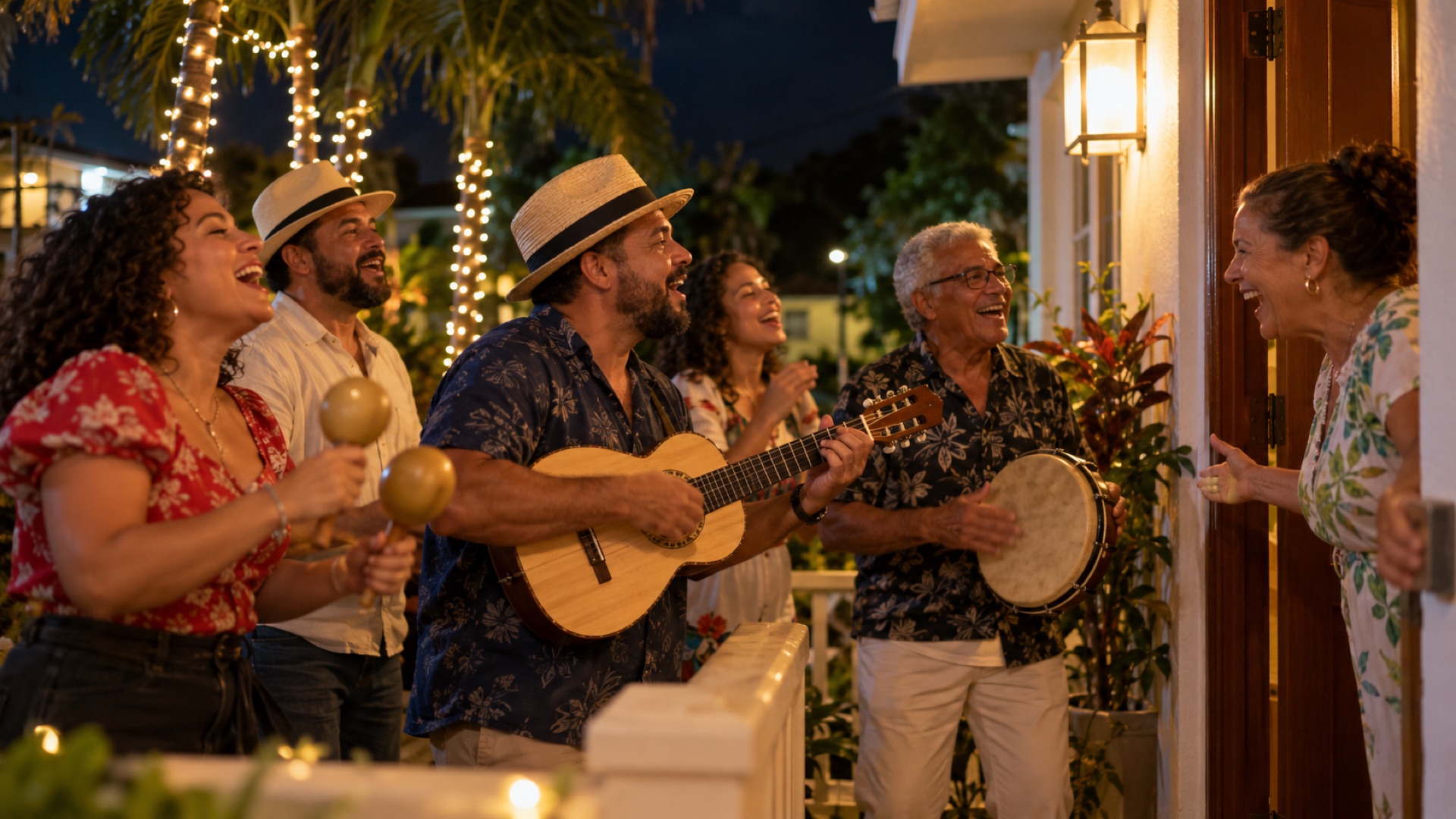
It's eleven at night, the house is quiet, and suddenly there's a cuatro, a güiro and a dozen voices singing outside your door. That's a parranda, Puerto Rico's favorite Christmas tradition. Here's how it works, and how to host one with your own people.
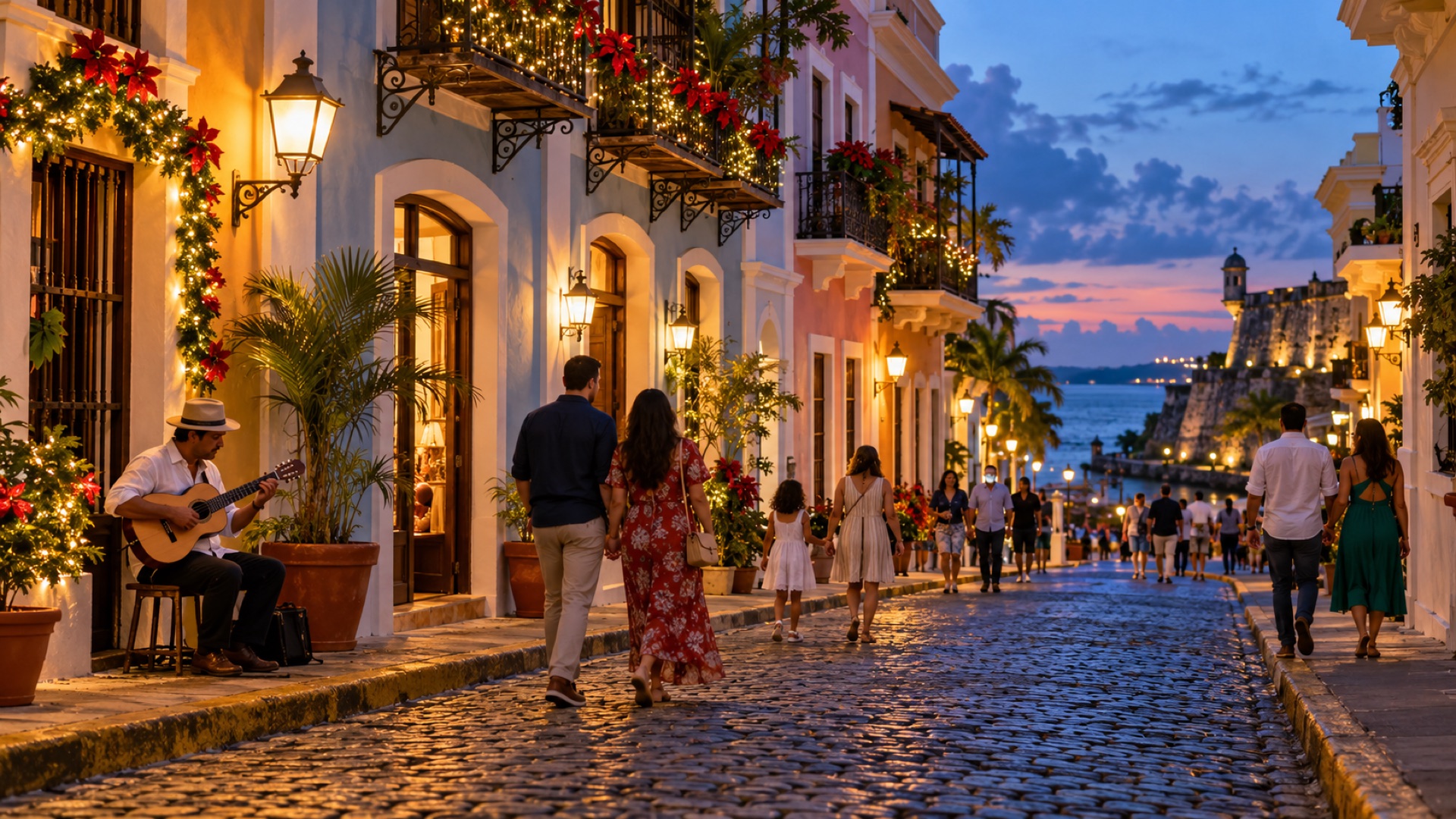
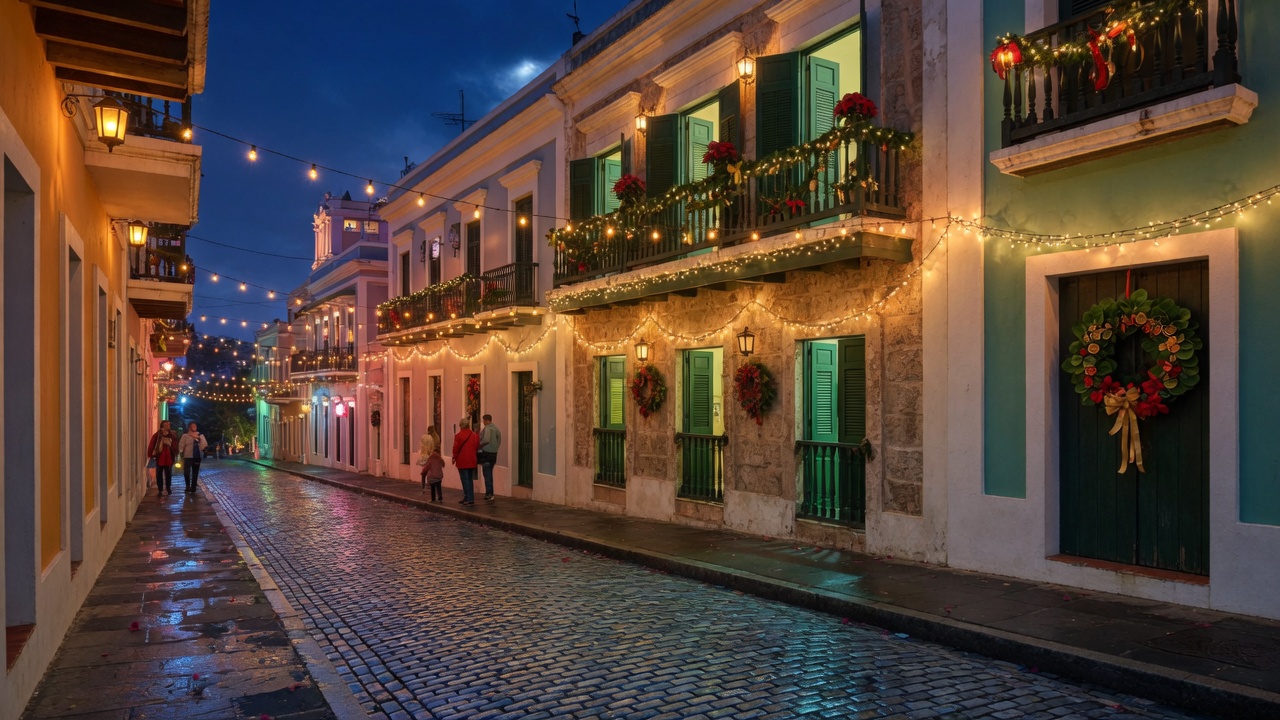
Every culture has a way of saying the holidays have arrived. In Puerto Rico it sounds like a surprise. A group of friends, family or coworkers gathers late in the evening, picks up instruments, and quietly walks up to someone's house. Then they start to play. The lights inside come on, the door opens, and within ten minutes the hosts are in the kitchen pulling out food while the living room fills with music. An hour later, the hosts often grab a maraca and join the group as it moves on to the next house.
It's joyful, a little chaotic, and completely unlike carol singing anywhere else. If you spend the Christmas season on the island, there's a good chance you'll hear one go past. If you rent a house with your own family and friends, you can start one yourselves.
A parranda is a Puerto Rican Christmas tradition where a group of friends arrives at someone's home, usually late at night and unannounced, singing traditional songs and playing instruments. The hosts welcome them with food and drink, then often join the group to surprise the next household. It's also called an asalto navideño or a trulla.
The essentials, in one place:
Quietly at first, then loudly. The group gathers near the chosen house, waits until the lights are low, and starts singing at the door. The hosts are expected to open up, feed everyone and pour a drink. Then the whole group, hosts included, moves on to the next house, and the parranda grows as the night goes on.
The surprise is the heart of it. The traditional songs even include verses asking the household to open the door and bring out the food, so nobody's in any doubt what's expected. In practice, many families get a quiet heads-up so there's something in the fridge, but the pretense of surprise is part of the fun, and the hosts always act astonished.
The instruments are what make it unmistakably Puerto Rican. The cuatro is the island's national instrument, a small guitar with ten strings in five pairs, bright and ringing. The güiro is a hollow gourd scraped with a metal comb for that scratchy rhythm. Maracas shake out the beat, and in many groups a pandero, the round hand drum of plena music, keeps everyone together. You don't need to play anything to join in. You just need to sing the chorus loudly and badly, and everyone will love you for it.
It starts after Thanksgiving and runs through the whole Christmas season, peaking in December. Puerto Rico's holidays are famously long, carrying on through Christmas Eve, New Year, Three Kings Day on January 6 and the octavitas that follow, so parrandas pop up for weeks. Weekends are the busiest nights.
That long season is one of the island's real gifts. Christmas here doesn't fit into one day or even one week. Offices hold their own parrandas, neighborhoods take turns hosting, and families plan big weekends together in December just to keep the celebrations going. It's the reason so many Puerto Ricans living on the mainland fly home for the holidays, and why the island feels so full of life from late November until well into January.
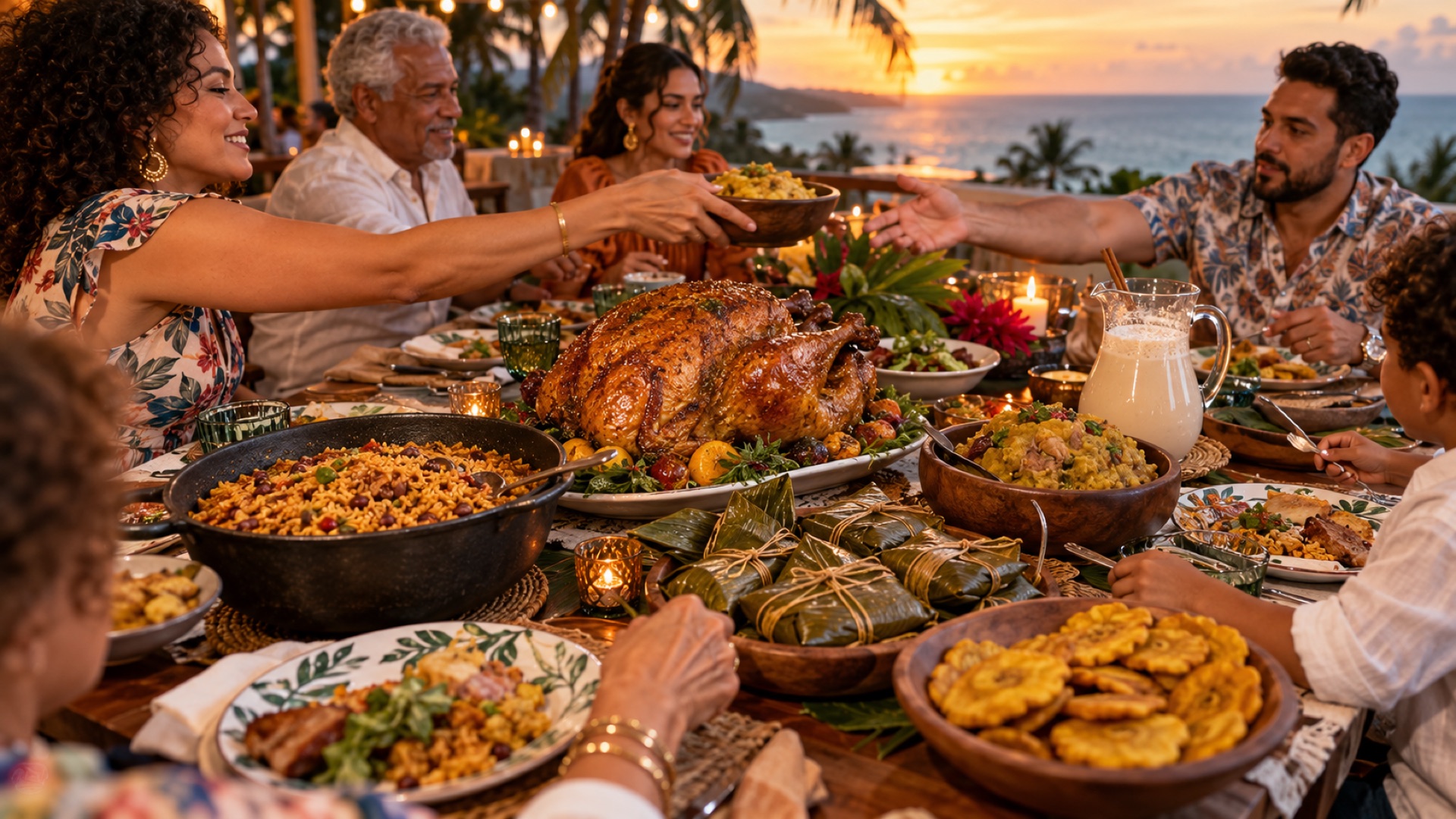
Whatever the hosts can put out quickly, which in a Puerto Rican kitchen in December is a lot. Expect pasteles, arroz con gandules, roast pork, and plenty of coquito, the island's coconut eggnog. At the last house of the night, the tradition is asopao de pollo, a hearty chicken and rice soup that keeps everyone going until dawn.
Coquito deserves its own sentence. It's made with coconut milk, condensed milk, cinnamon, vanilla and rum, chilled and served in small glasses, and every family guards its own recipe. Bottles get handed between friends all season with handwritten labels, and declining a glass at a parranda is simply not done.
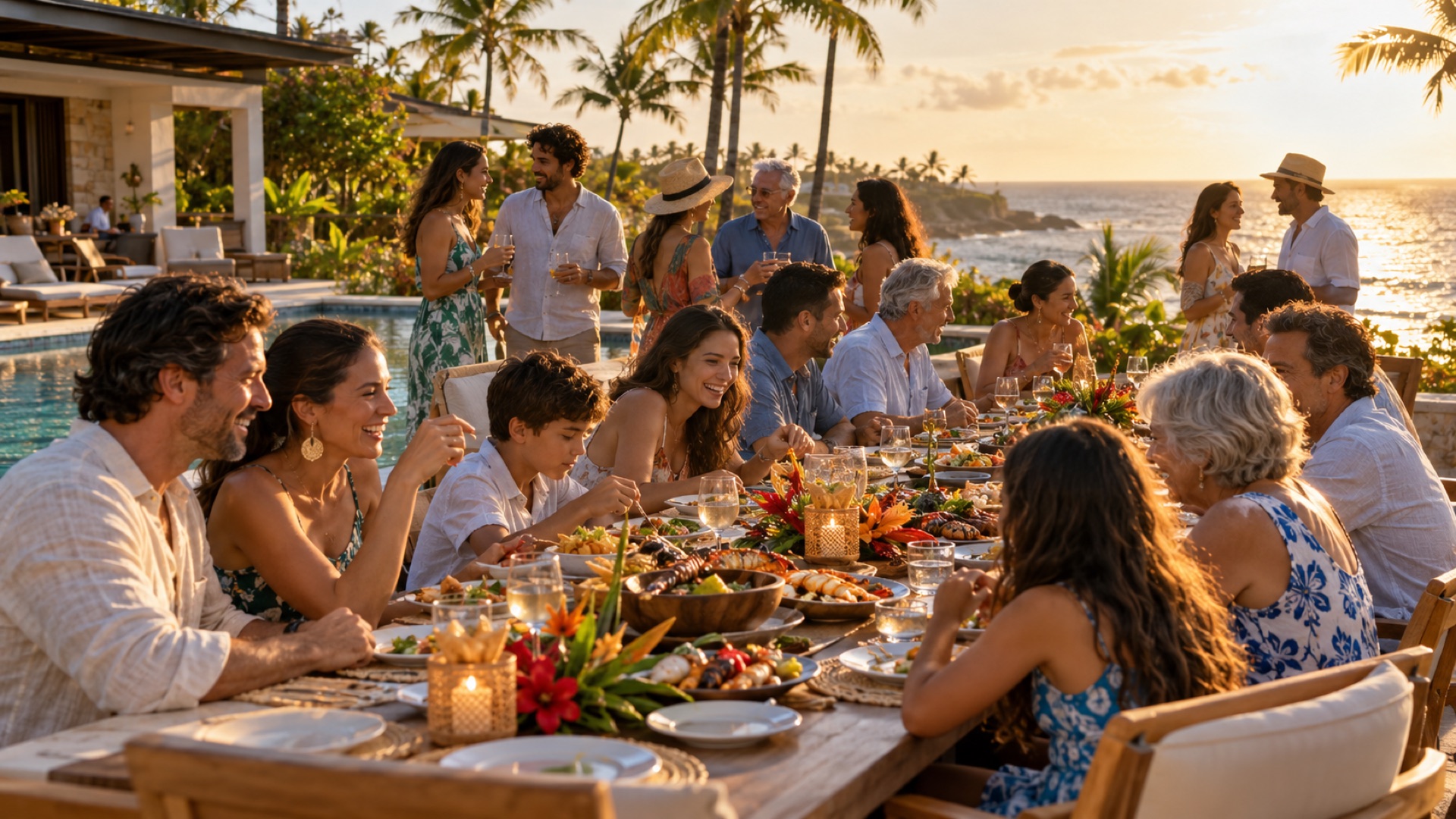
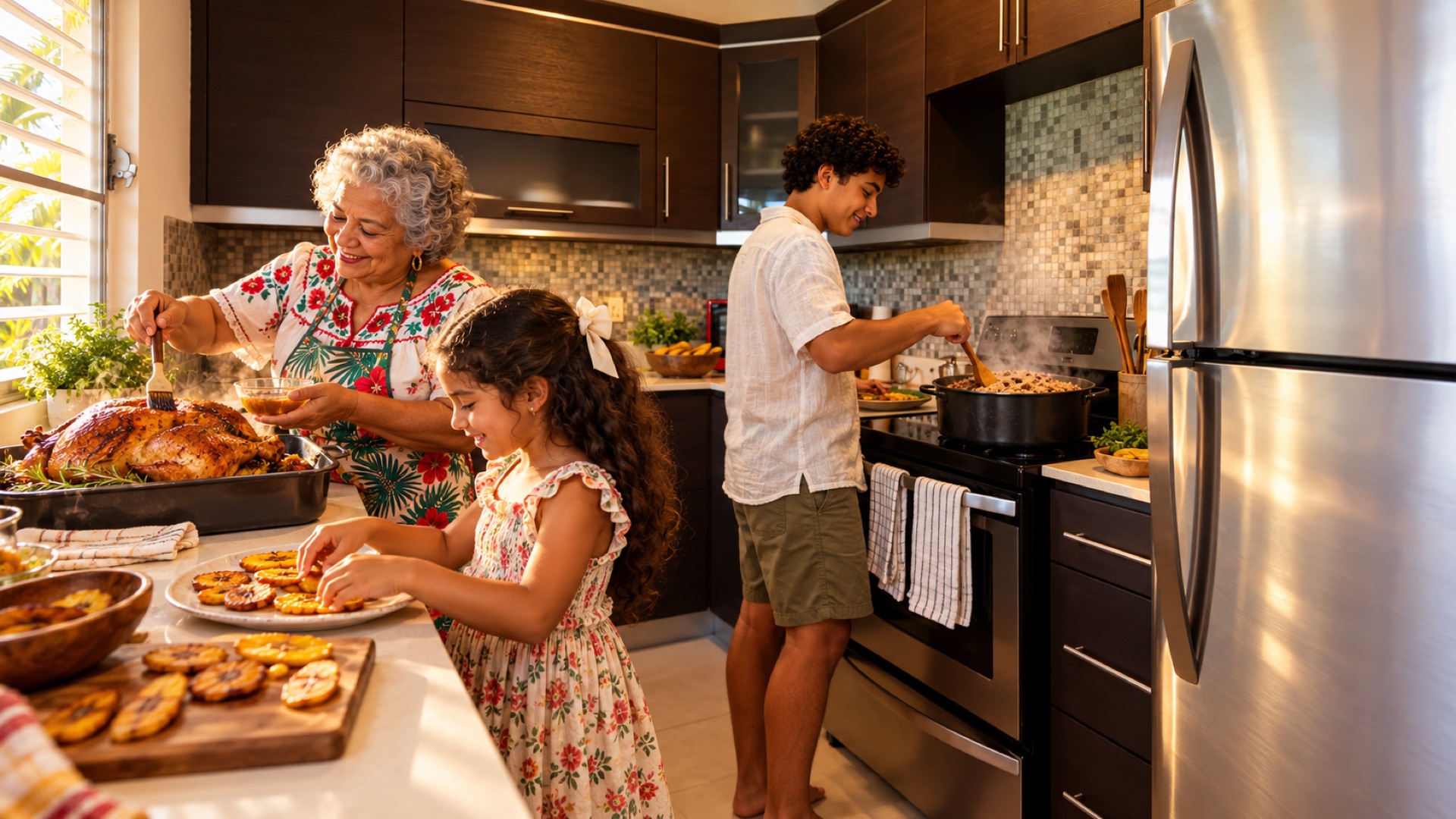
Rent a house with room for everyone, invite friends from nearby, stock the kitchen and let the music start. In Dorado, a villa with a porch and a kitchen makes a perfect base for a holiday weekend parranda, whether you're surprising cousins down the street or hosting your own group's celebration at home.
This is the version that suits a family staycation. Many Puerto Rican families book a big house for a December weekend precisely so everyone can be together, cook together and celebrate with music. Bring the instruments, or a speaker if nobody plays, make a pot of asopao, chill the coquito, and plan your own trulla for Saturday night. If you're hosting, make sure there's food ready for when the music shows up at your door.
Be good neighbors, too. Keep the music friendly, follow the house rules for your stay, and remember that a parranda is about warmth, not volume.
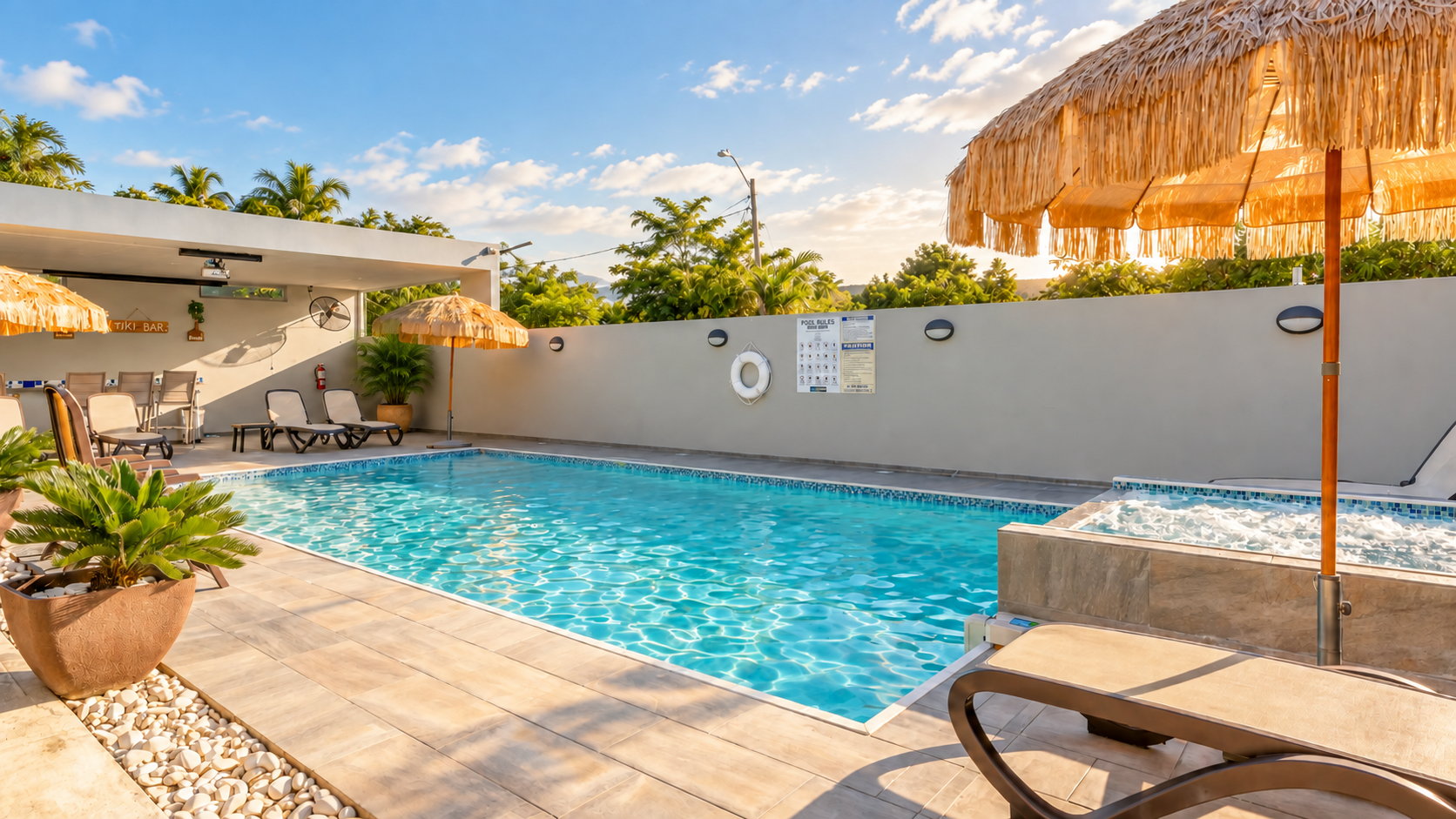
Choose a house with room for the group and a kitchen for the food. Ville Moderna offers villas with full kitchens on a quiet street near the beach. Villas Del Mar puts a large family on its own beachfront. A Casas room suits a couple joining the family celebrations nearby.
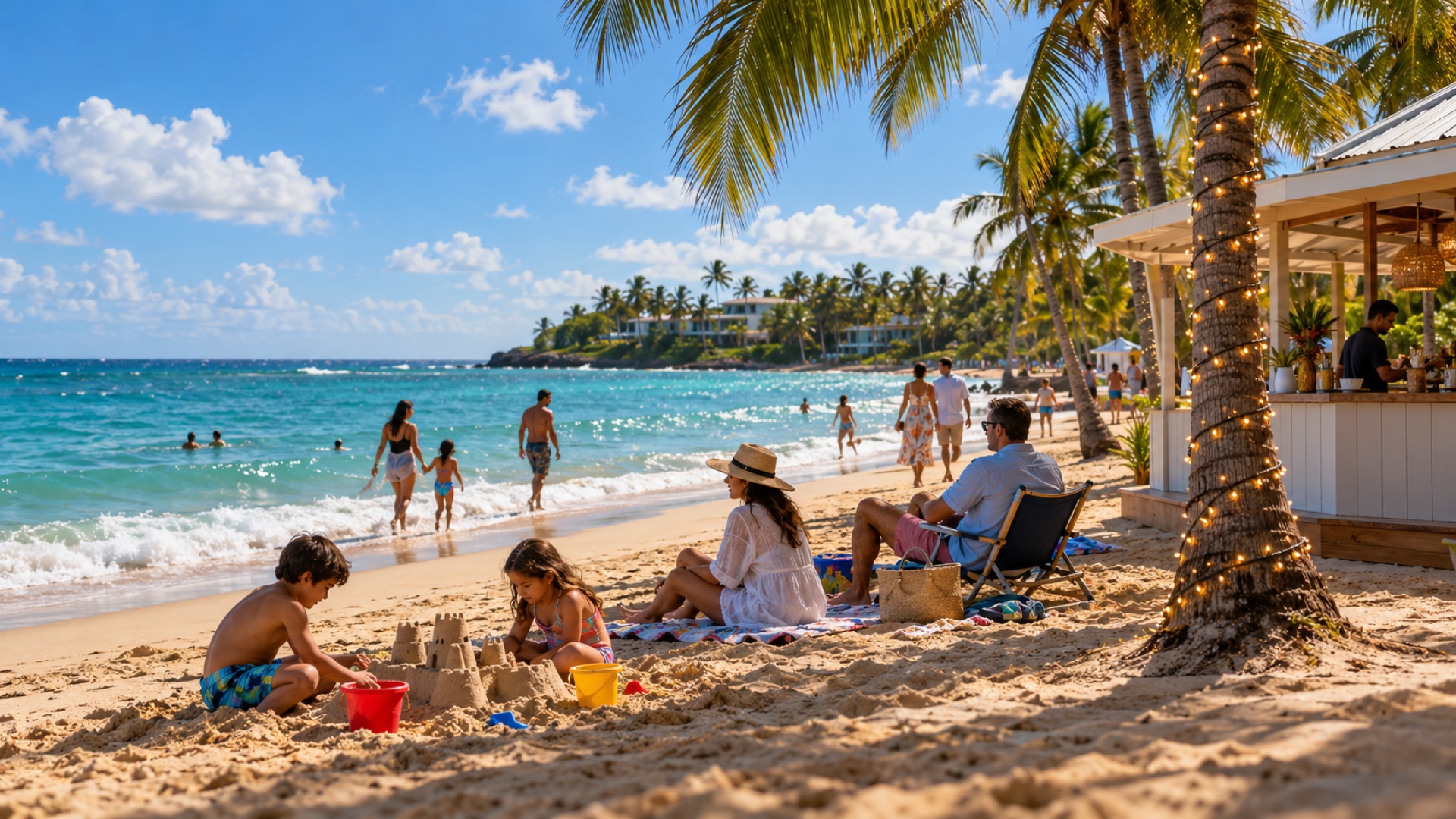
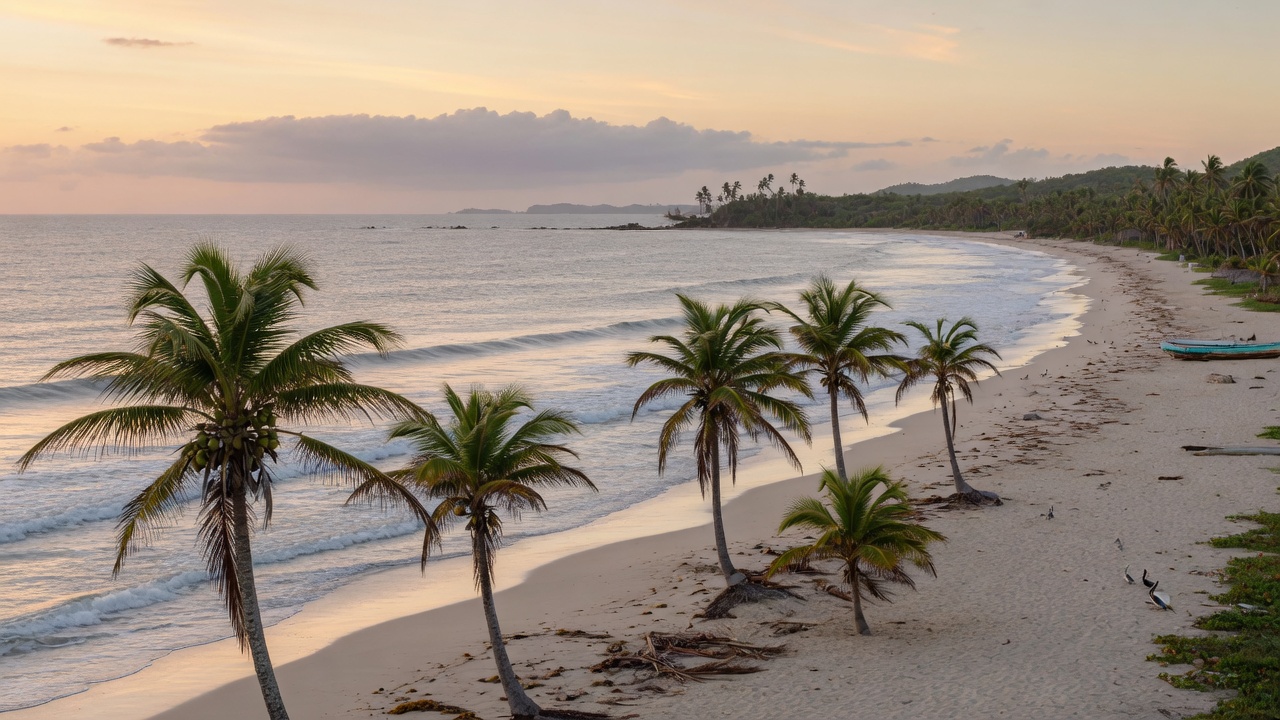
You don't need a flight to feel like you've gone away for the holidays. From the metro area, Dorado is a short drive west, with the beach, the kitchen and the whole family under one roof. Aqua Dorado has been hosting island families for nine years, with a 4.82 rating across more than 950 reviews on our travel listing sites. For groups and celebrations, start at our events page.
Choose the house that fits your group, enter your dates and book directly on aquadorado.com.
A parranda is a Christmas tradition where friends arrive at someone's home late at night, singing and playing traditional music. The hosts welcome them with food and drink, then join the group as it moves on to the next house. It's also known as an asalto navideño.
From the weekend after Thanksgiving through the Christmas season, peaking in December. The season continues past Three Kings Day on January 6.
The cuatro, Puerto Rico's ten-string national guitar, plus the güiro, maracas and panderos. Singing the chorus is the only skill guests really need.
Aguinaldos and plenas, the traditional Christmas songs of Puerto Rico. Many verses playfully ask the household to open the door and share food.
Pasteles, arroz con gandules, roast pork and coquito are common. At the last house of the night, hosts traditionally serve asopao de pollo, a chicken and rice soup.
Yes, if you're invited, and Puerto Ricans are generous about inviting. If you're staying with family or friends on the island, you can also host your own from a rented house.
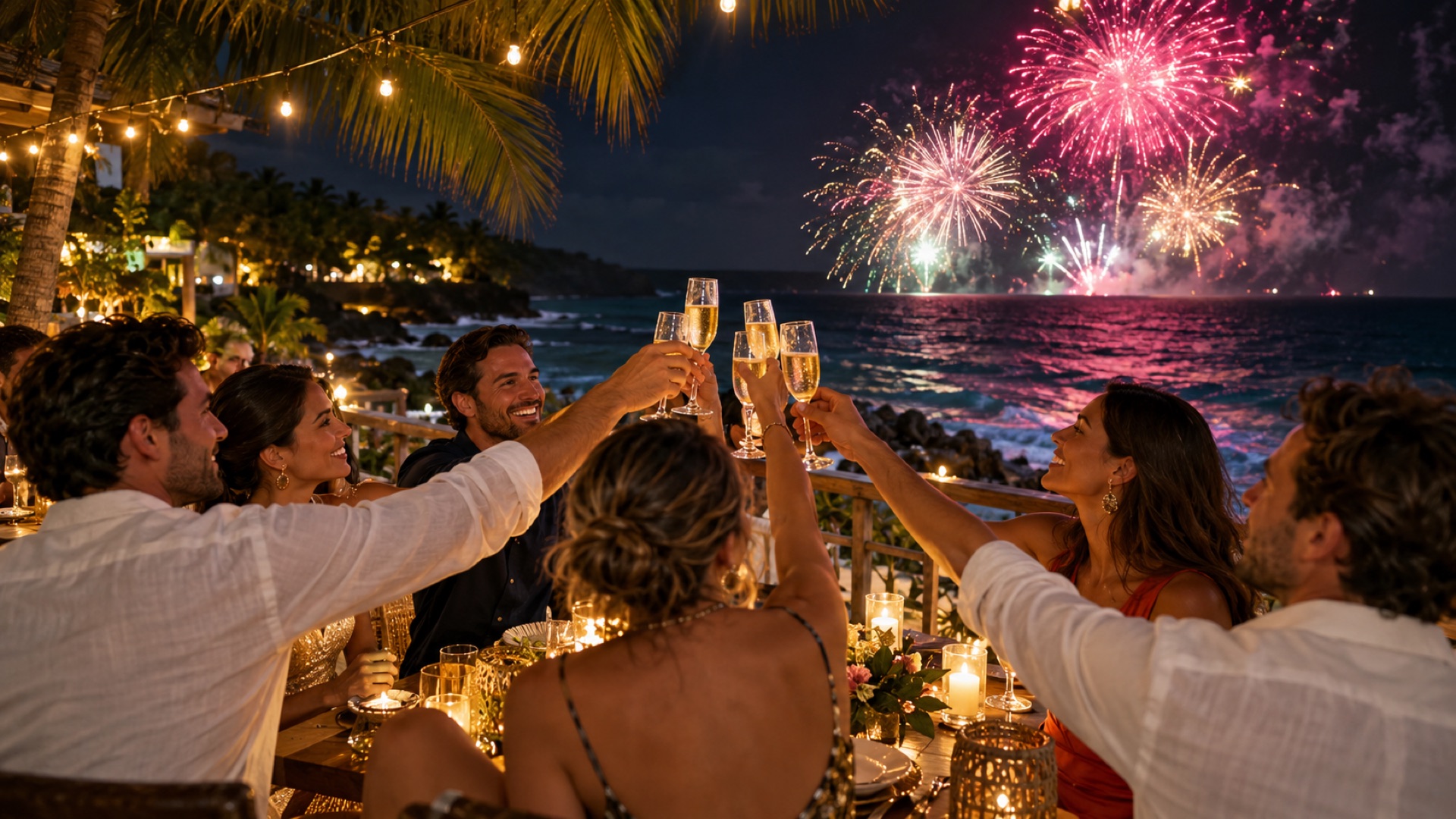
Gather your people, stock the kitchen and let the music find your door this Christmas.




 EN_US
EN_US  ES
ES